MOTIF Learning Design Framework
Building a scalable content and design framework for a multi-publisher EdTech platform.

Overview
MOTIF was an online learning platform, aiming at bridging the skills gap in fashion and apparel industry for practitioners.
Unlike marketplace-based learning platforms where publishers independently manage their content, MOTIF operated a curated model. Publishers contributed subject-matter expertise, while MOTIF shaped how content was presented and experienced by learners.
My role was to help maintain this balance—preserving the credibility of publishing partners while ensuring learners encountered a consistent and recognisable MOTIF experience across courses, events, and communications.
The Challenge
As MOTIF expanded its catalogue of courses, events, subscriptions, and publisher partnerships, the platform was evolving from a collection of learning products into a more complex digital ecosystem.
New publishers brought valuable expertise and content, but they also introduced different visual styles, content formats, and communication approaches. At the same time, learners needed a clear way to discover relevant content, understand the platform's value proposition, and navigate an increasingly broad offering.
Without a clear framework, the homepage risked becoming a collection of disconnected content blocks rather than a coherent entry point into the platform.
As a result, we had to A) define a content strategy that balanced learner needs, our business goals, and publisher visibility, and B) create a scalable framework that could accommodate future growth without diluting the MOTIF experience.
Establishing a Scalable Content Framework
As the platform grew, decisions about what content should appear on the homepage became increasingly difficult.
The challenge was not simply deciding what content to show. It was determining how the platform should balance learner discovery, publisher visibility, business objectives, and conversion opportunities without overwhelming users.
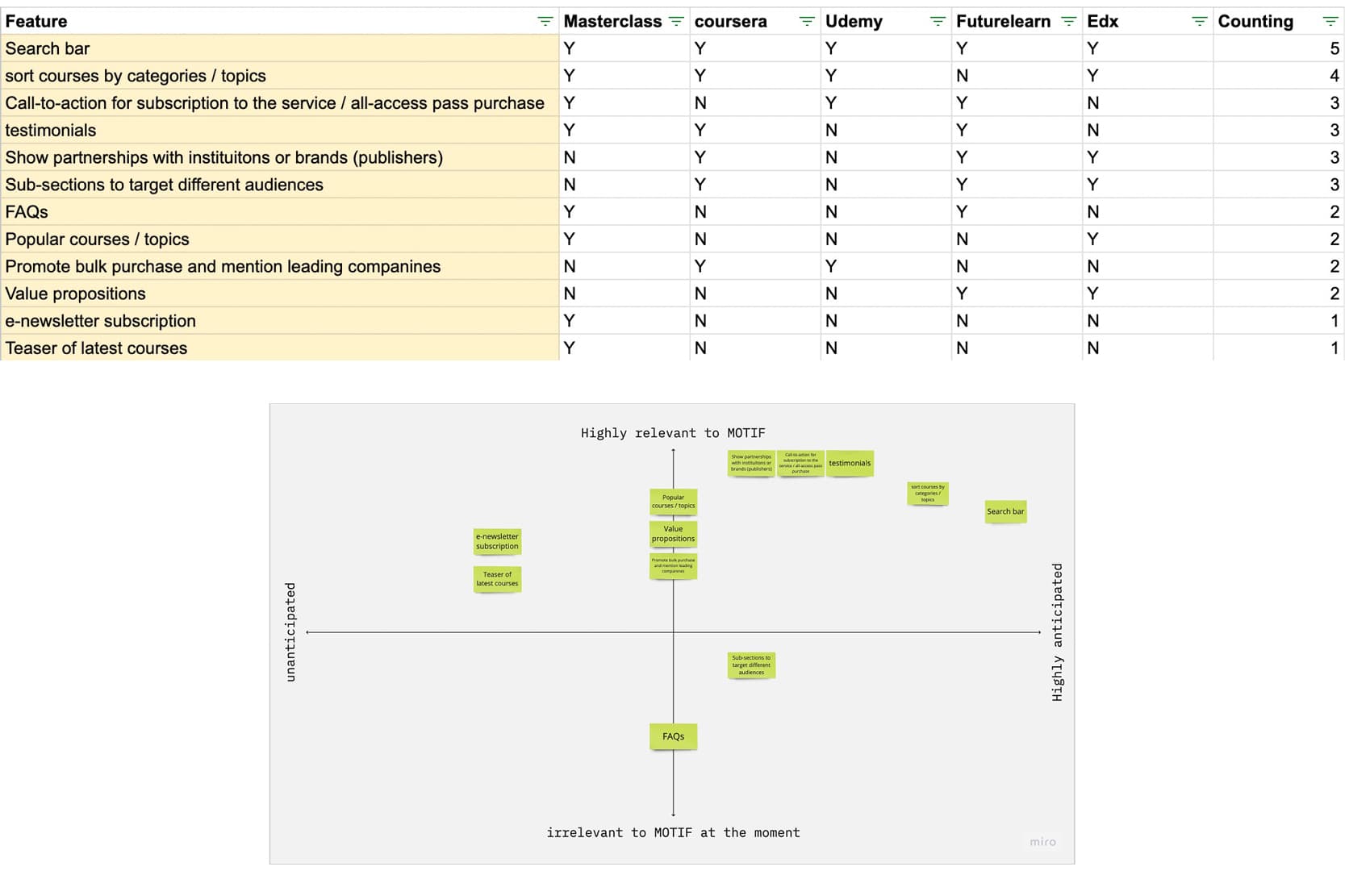
To identify useful patterns, I reviewed established learning platforms including Coursera, Udemy, FutureLearn, EdX, and MasterClass. Rather than replicating competitor features, I analysed which content structures aligned with MOTIF's curated publishing model.
Features were then prioritised according to two criteria: 1 Relevance to MOTIF's business objectives 2 Anticipated value to learners
This exercise helped establish a clear content hierarchy and informed decisions around:
1 Course discovery 2 Subscription promotion 3 Publisher visibility 4 Social proof 5 Conversion pathways
Structuring Discovery and Navigation
As the content catalogue expanded, information architecture became increasingly important.
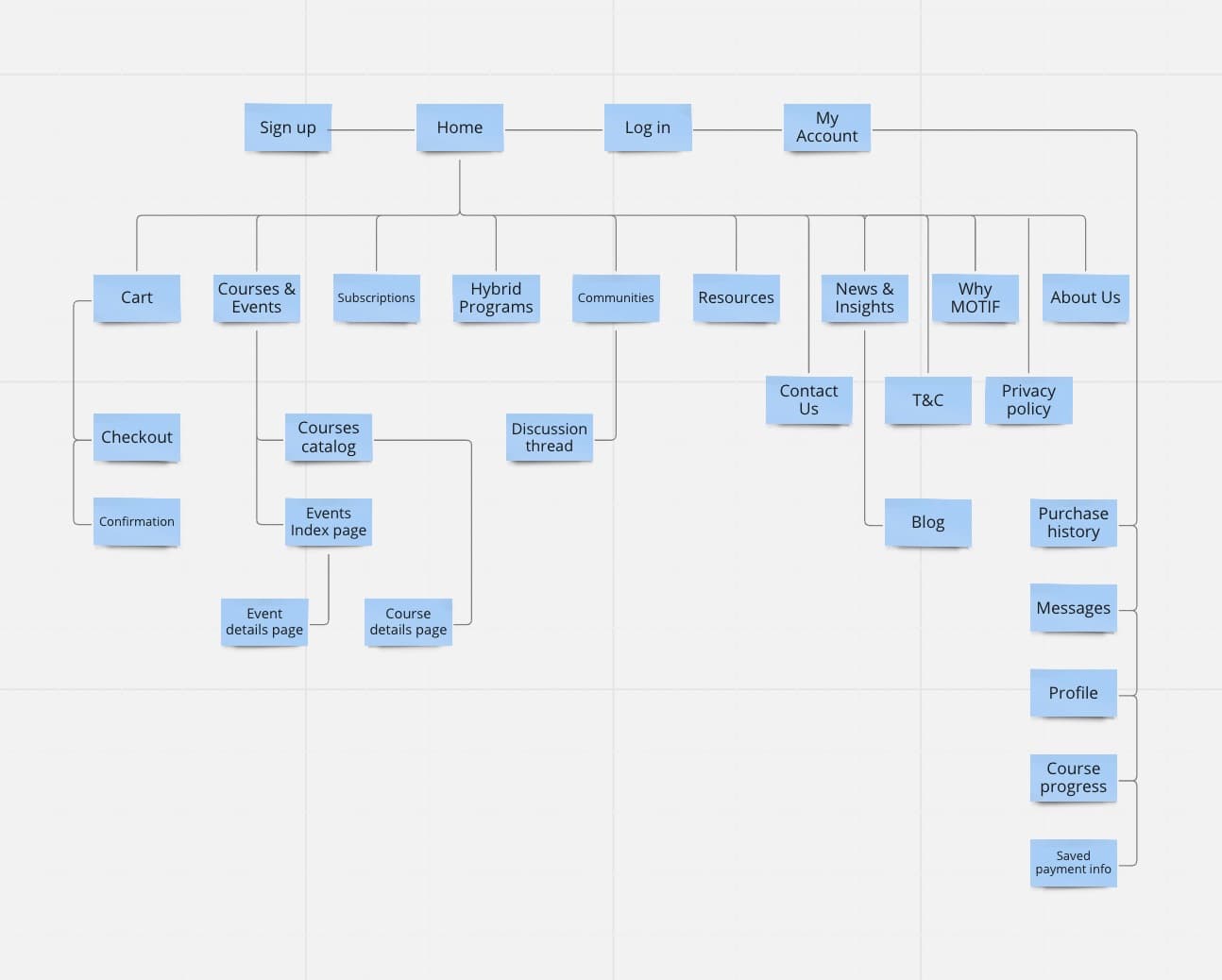
I mapped the platform structure to support multiple content types, subscriptions, communities, resources, and publisher partnerships while keeping navigation intuitive for learners.
The goal was to reduce complexity while making it easier for learners to discover relevant content.
Translating Strategy into Platform Structure
Once priorities were established, the next challenge was organising the growing ecosystem of products and services.
The platform needed to support:
- 1Online Courses
- 2Online Events
- 3Communities
- 4Resources
- 5Publisher content (free downloadables)
- 6Account management
while maintaining a navigation structure that remained intuitive as the platform expanded.
The resulting structure established a foundation that could support future content growth without requiring fundamental changes to navigation.
Designing the Homepage Experience
The homepage served multiple audiences simultaneously.
New visitors needed to understand the platform's value proposition. Existing learners needed quick access to content. Corporate buyers required evidence of credibility, while publishers needed visibility and recognition.
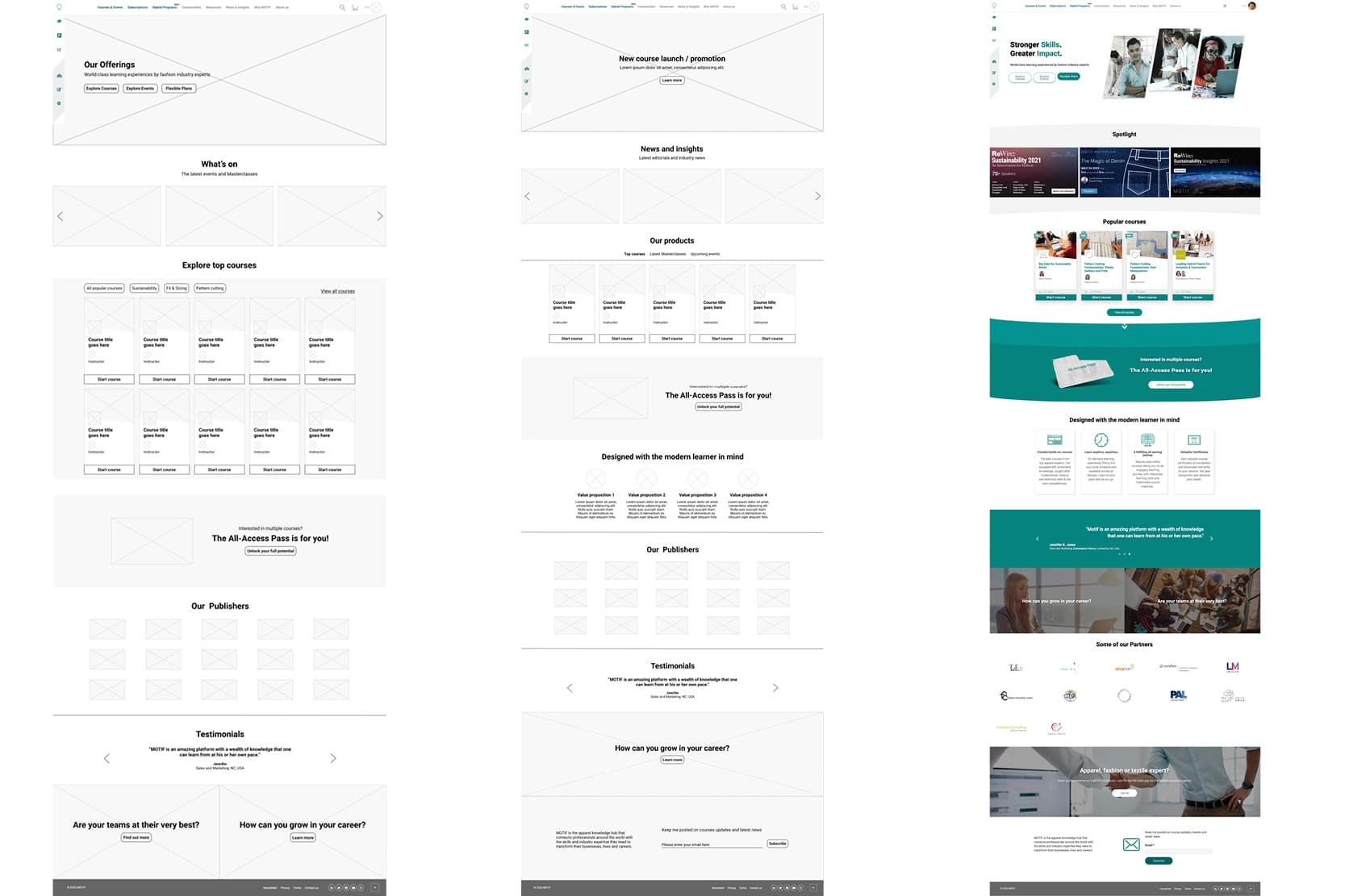
Early concepts explored different approaches to balancing discovery, conversion, and trust.
The final homepage introduced a structured hierarchy that surfaced featured content, publisher partnerships, subscriptions, testimonials, and learning pathways without overwhelming users.
Balancing Publisher Identity with Platform Consistency
A defining challenge of the platform was balancing flexibility and governance.
Publishers such as Alvanon, LIM College, and independent industry experts needed enough visibility to maintain their credibility and authority. At the same time, MOTIF needed to provide a consistent experience across the platform.
Rather than imposing a rigid visual system, I established guidelines that defined which elements belonged to publishers and which belonged to the platform.
This created a framework where publisher expertise remained visible while learners continued to experience a coherent MOTIF experience.
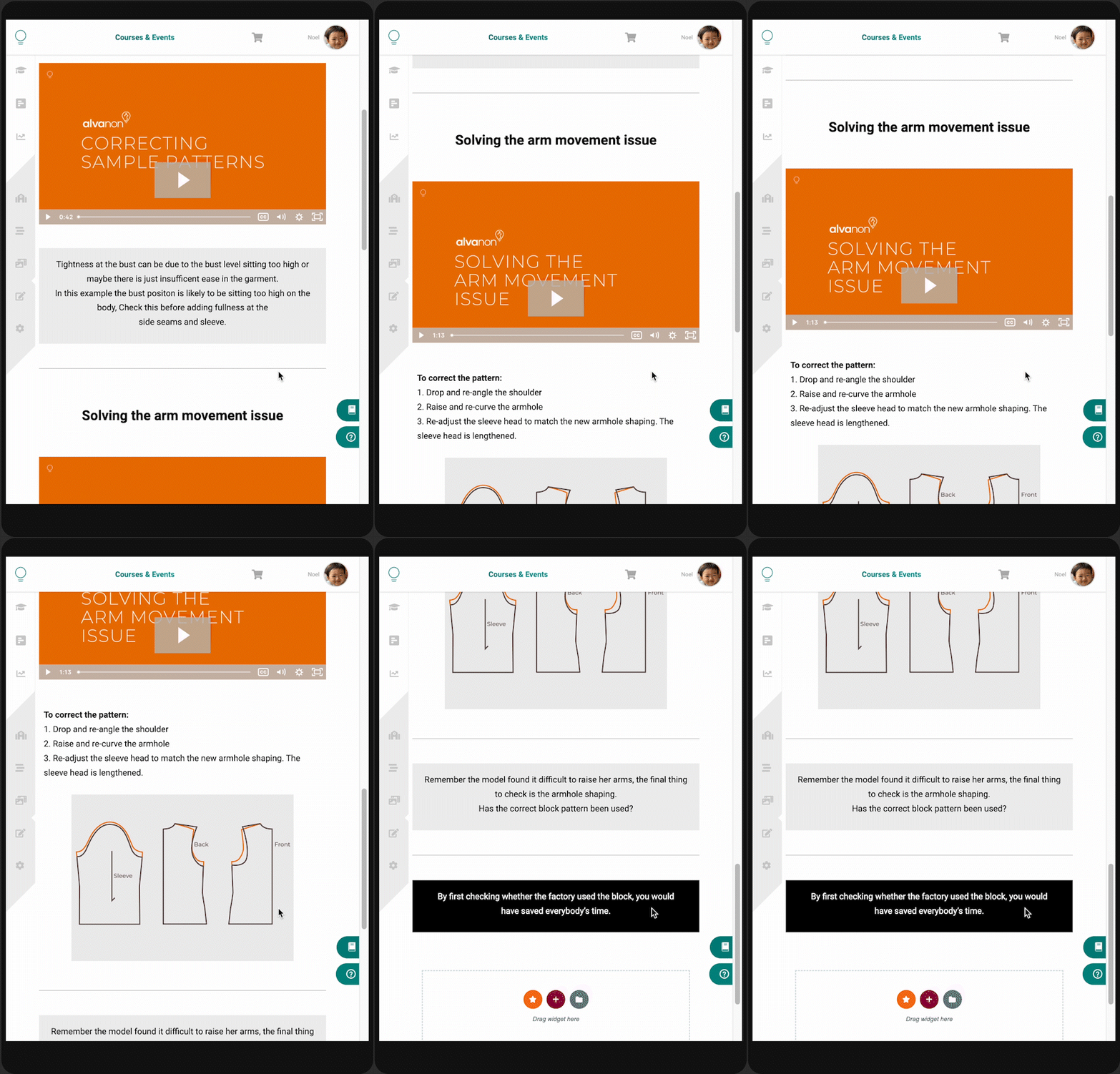
Scaling Content Production Through Shared Guidelines and Assets
As MOTIF expanded its catalogue of courses, events, and publisher partnerships, maintaining quality across both learning and marketing content became increasingly challenging.
Publishers supplied content in different formats and levels of visual maturity. Some partners provided professionally designed materials, while others supplied presentation slides, raw documents, or teaching materials that required significant adaptation before publication.
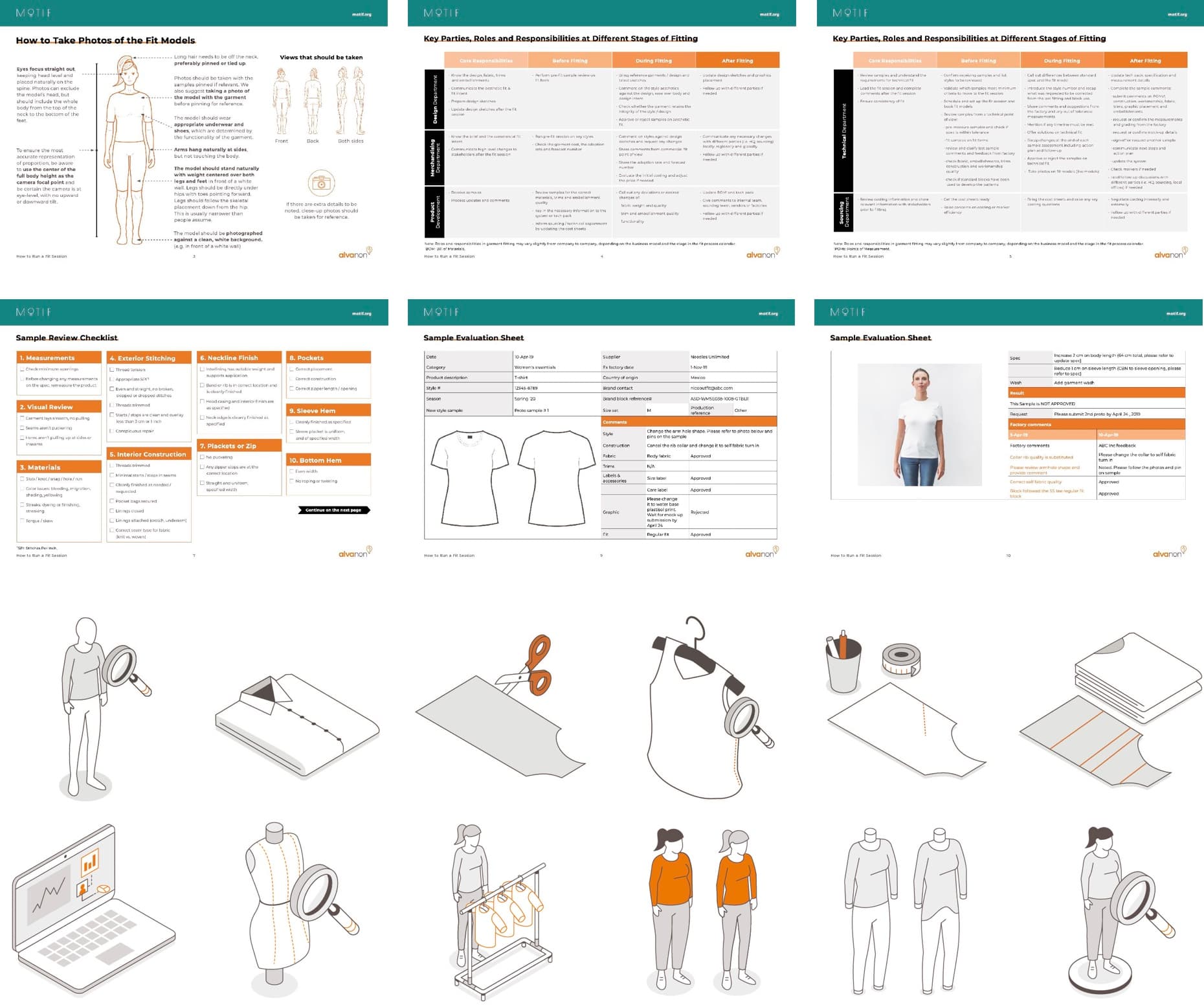
To improve consistency, I created a collection of shared guidelines, templates, and visual assets that could be used across different content types and communication channels.
These included:
- 1Course video guidelines
- 2Learning material guidelines
- 3Downloadable resource templates
- 4Icon libraries and supporting graphics
- 5Marketing communication toolkits for online course launches
Together, these resources helped the team produce course materials, launch campaigns, downloadable assets, and promotional content more consistently while maintaining a recognisable MOTIF identity.
The objective was not to make every course look identical. It was to ensure learners experienced a consistent level of quality, readability, and professionalism regardless of which publisher created the original content.
Outcomes
The framework enabled MOTIF to collaborate with a growing network of publishers, educational institutions, and industry experts without compromising the consistency of the platform experience.
By establishing shared visual standards and content guidelines, the platform could accommodate diverse contributors while maintaining a recognisable MOTIF identity across learning materials, marketing communications, and digital touchpoints.
The framework supported the successful delivery of:
- 10 online courses
- 2 online conferences
- 2 masterclass series
It enabled collaboration with multiple publishers while maintaining a consistent experience across the platform.
Achievements
- Average learner rating of 4.5 / 5 for professionalism and aesthetics
- Consistent presentation across multiple publishers and subject-matter experts
- Improved discoverability of courses and learning pathways
- Established scalable standards for future content production
Reflection
Looking back, this project taught me that consistency is not created by controlling every output. It is created by establishing clear principles, boundaries, and shared standards that allow multiple stakeholders to contribute within a common framework.
Although the context was online learning, the challenge closely resembles many product design problems I encounter today: balancing flexibility with governance, supporting multiple contributors, and maintaining a coherent user experience across a growing ecosystem.
The project strengthened my ability to work across business partnerships, content creators, and internal teams while keeping user experience and platform consistency at the centre of decision-making.